
DragonflyCats
The DBE mutation
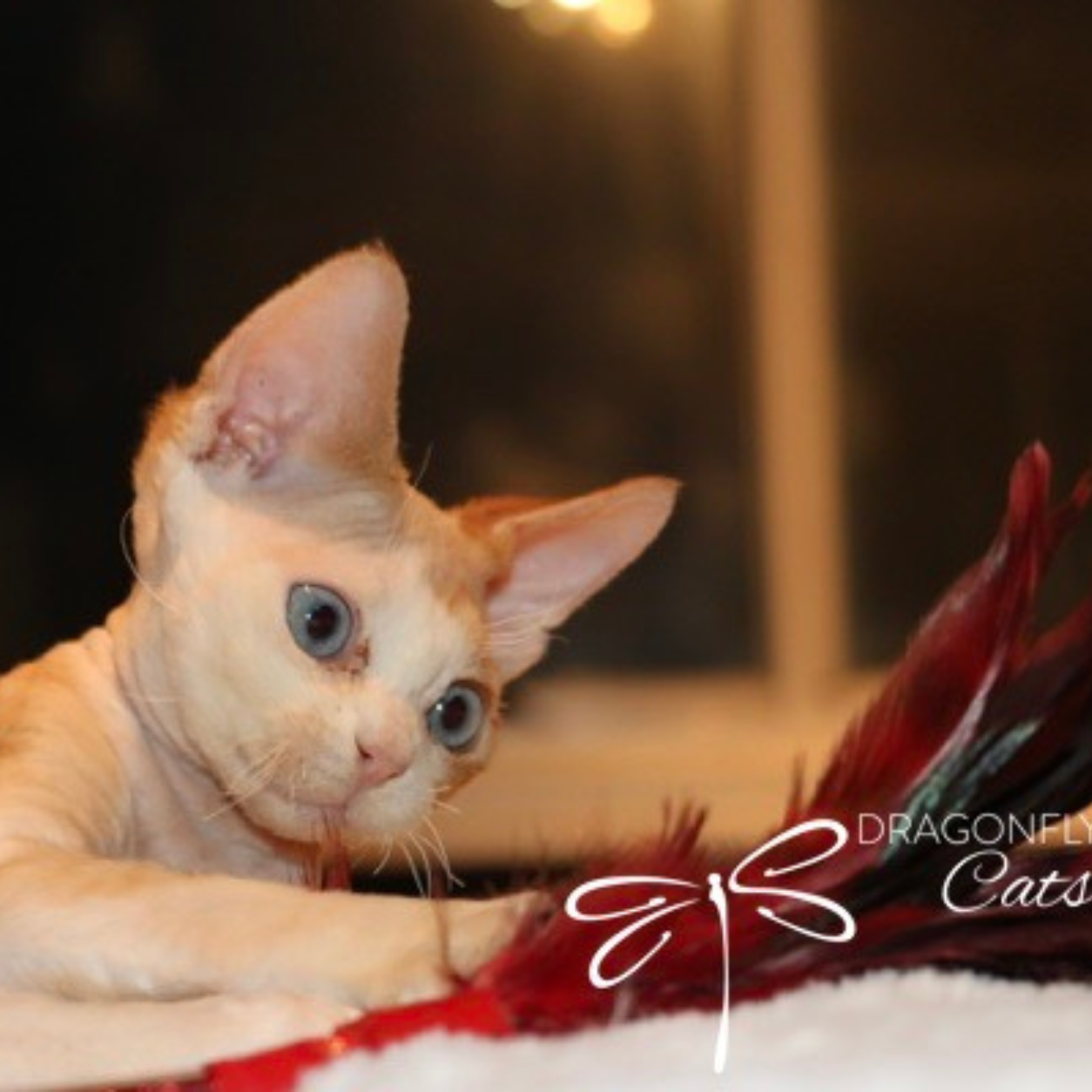
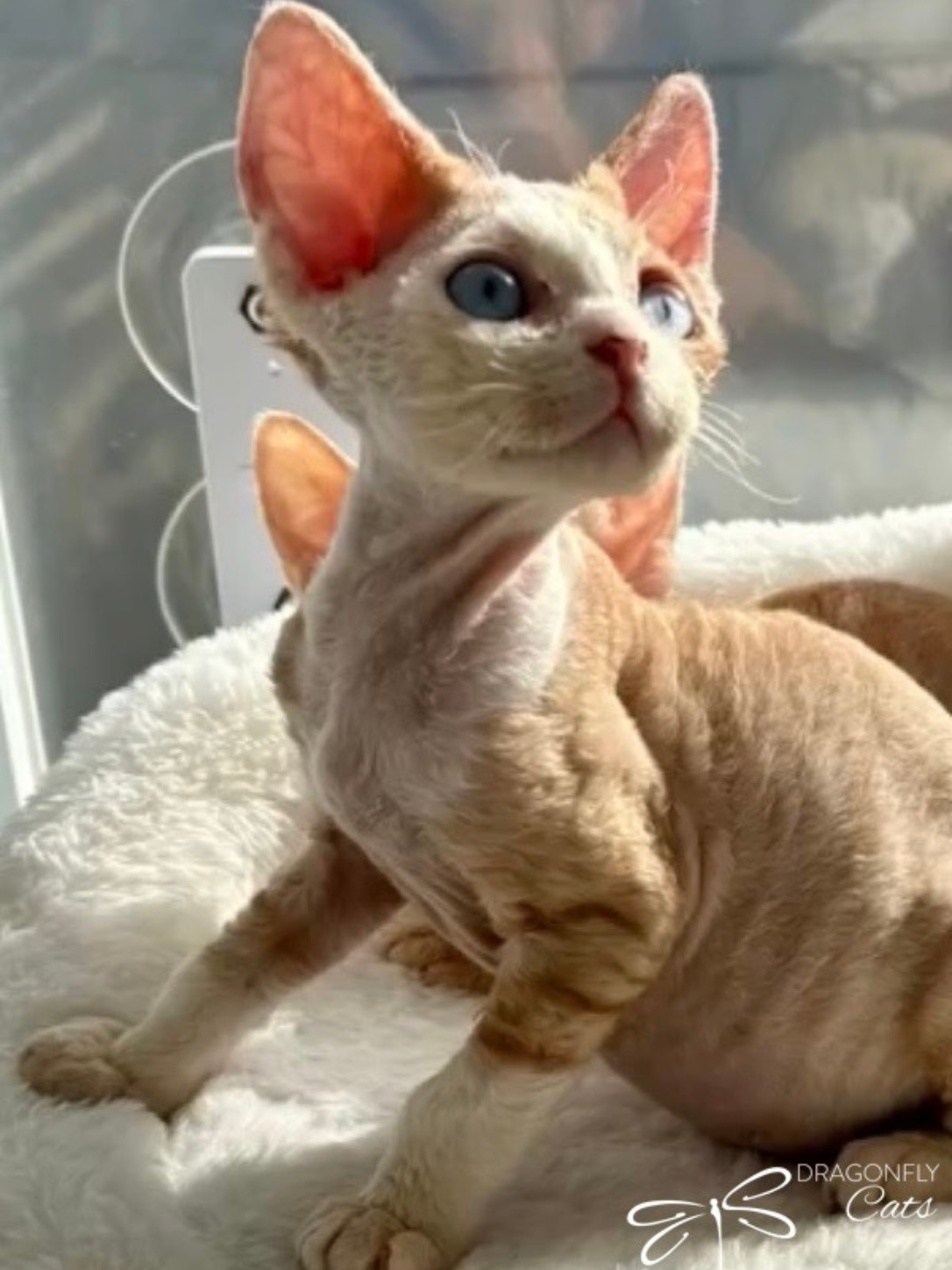
Enhancing the Devon Rex with Dominant Blue Eyes
In cats, blue eyes are most commonly associated with colourpoint genetics, extensive white spotting, or dominant white coat colour.Dominant blue eye phenotypes differ from these traditional mechanisms because they can produce blue or partially blue irides in cats that do not otherwise have colourpoint patterning or extensive white.
The term DBE refers to a group of autosomal dominant variants associated with blue or heterochromic eyes, rather than a single universal mutation.In Devon Rex, a documented DBE lineage can allow normally pigmented cats, including solid or tabby individuals, to express one or two blue eyes while retaining the breed’s expected coat type and conformation.
Several DBE variants have been described in domestic cats. Because each lineage may have a different molecular origin and health profile, DBE should be discussed by specific lineage rather than as one uniform trait.
Introduction of the gene
Our cats are selected from the DBE ALT, or Altai, lineage. This lineage is associated with a defined PAX3-region variant and is managed as an autosomal dominant trait.
The introduction of any DBE lineage requires careful evaluation of genetic origin, auditory health, breeding ethics, and breed-standard compatibility.
The ALT lineage, originally associated with Altai-type cats from Russia and neighbouring regions, is among the better documented DBE lineages currently used in breeding programs.
By working exclusively within the ALT lineage and avoiding DBE-to-DBE pairings, our objective is to maintain blue-eye expression while preserving normal hearing, health, temperament, and Devon Rex type.
Our breeding approach prioritizes health screening, lineage verification, and conservative integration of DBE ALT into the Devon Rex population.
DBE studies and science
Recent discussion around DBE has included legitimate concerns as well as misinformation. The distinction between DBE lineages is essential, because different variants may carry different genetic and clinical implications.
Deafness, reality or myth?
A common concern is whether blue eyes outside traditional colourpoint or white-coat genetics increase the risk of congenital deafness.
The scientifically accurate answer depends on the lineage. Some DBE variants have been associated with auditory-pigmentary effects, while heterozygous DBE ALT cats are not generally reported to show the same deafness association when bred responsibly.
How does this gene work?
By inheritance
DBE ALT is inherited as an autosomal dominant trait. When a heterozygous DBE ALT cat is bred to a non-DBE cat, approximately 50% of the offspring are expected to inherit the variant.
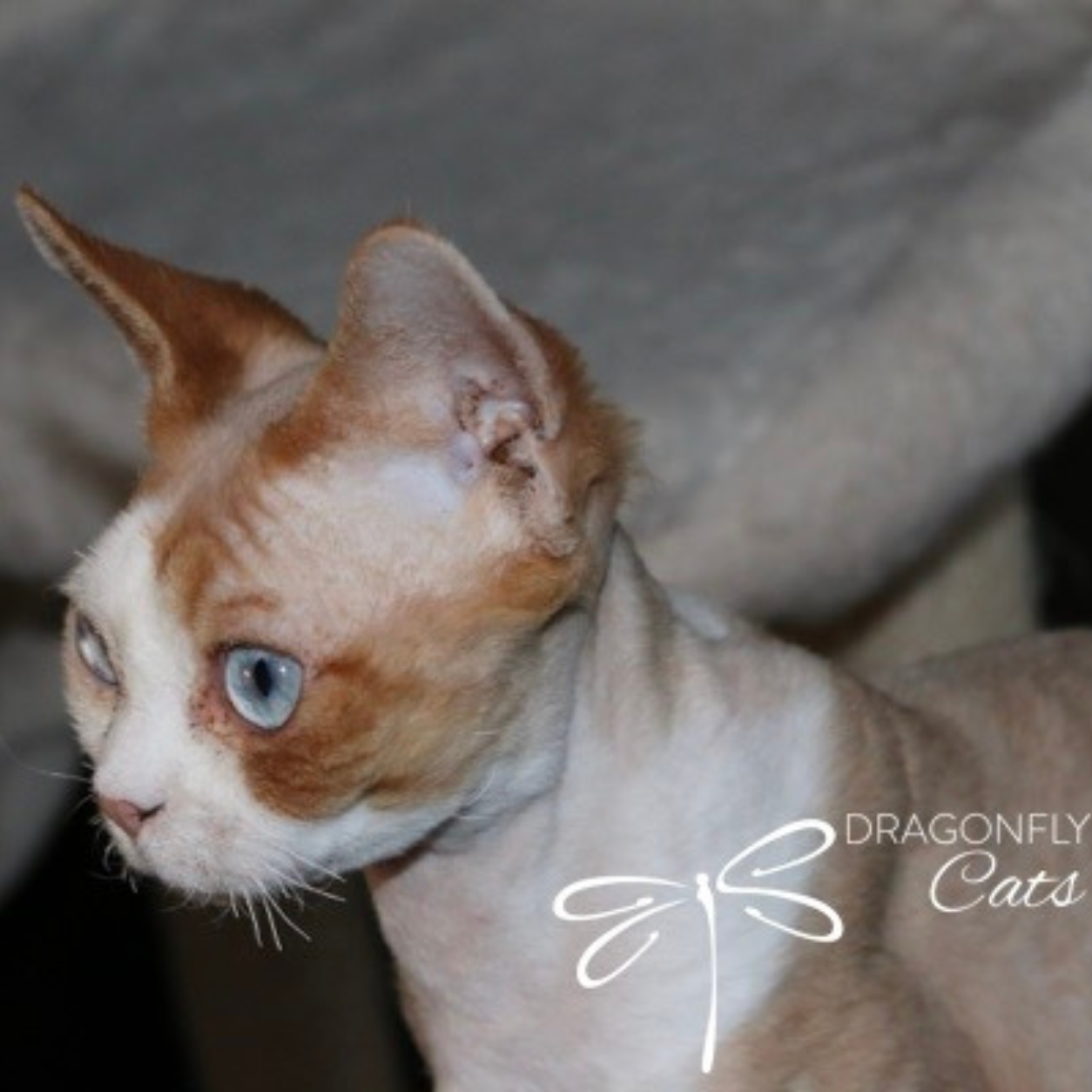
Although neonatal kittens normally have blue eyes, permanent DBE ALT expression becomes more reliably distinguishable as juvenile eye colour develops, typically around 7 to 8 weeks of age.
DBE 2026 and Later
A distinct biological mechanism: Unlike KIT-associated dominant white or extensive white spotting, DBE ALT is discussed as a PAX3-region dominant blue-eye variant. Responsible interpretation requires distinguishing iris pigmentation effects from variants that may also affect melanocyte function in the inner ear.
In our program, auditory status is evaluated through BAER testing where appropriate, and breeding decisions are made to avoid combinations that could increase auditory-pigmentary risk.
Safety of the ALT lineage: Reported Waardenburg-like complications are primarily associated with specific auditory-pigmentary variants or with inappropriate crossing of distinct DBE lineages. Our program uses the documented DBE ALT lineage and avoids DBE-to-DBE pairings. When a heterozygous DBE ALT cat is bred to a non-DBE cat, approximately half of the offspring are expected to inherit the variant, while the breeding strategy is designed to preserve normal health parameters.
Same Devon Rex phenotype, new eye expression: DBE ALT is selected for eye colour while maintaining the breed’s characteristic curly coat, social temperament, and structural type. It is not selected to alter skeletal structure, immune function, or sensory performance.
The scientific Foundation ( 2024-2026)
The Scientific Foundation (2024–2026)
Our breeding program is guided by published genetic research, lineage documentation, and objective health testing.
- Abitbol M. et al. (2024): Recent DBE studies describe multiple founding effects and distinguish DBE ALT from other dominant blue-eye lineages in domestic cats.
- Auditory evaluation: BAER testing remains the objective method for assessing hearing status in cats when auditory risk is a concern.
- Breeding protocol: Conservative DBE management avoids homozygous or compound heterozygous DBE pairings and does not mix distinct DBE lineages.
- Genetic verification: Lineage-specific genetic testing helps confirm which DBE variant is present and supports informed breeding decisions.
Plain-language summary
In simple terms, DBE ALT is a specific inherited blue-eye trait that can appear in Devon Rex cats without requiring a colourpoint pattern or a mostly white coat. Because it is dominant, a kitten only needs to inherit one copy of the variant to potentially show blue or partially blue eyes.
Our focus is not simply to produce blue eyes, but to use the ALT lineage carefully and responsibly. By avoiding DBE-to-DBE pairings, verifying lineage, and using health testing when appropriate, the goal is to preserve normal hearing, overall health, and the classic Devon Rex type while introducing this distinctive eye expression.
Our breeding goes beyond appearances; it is conducted with a profound respect for the science that sustains our cats.
As soon as new updated will be available on the DBE they will be added to this section.

